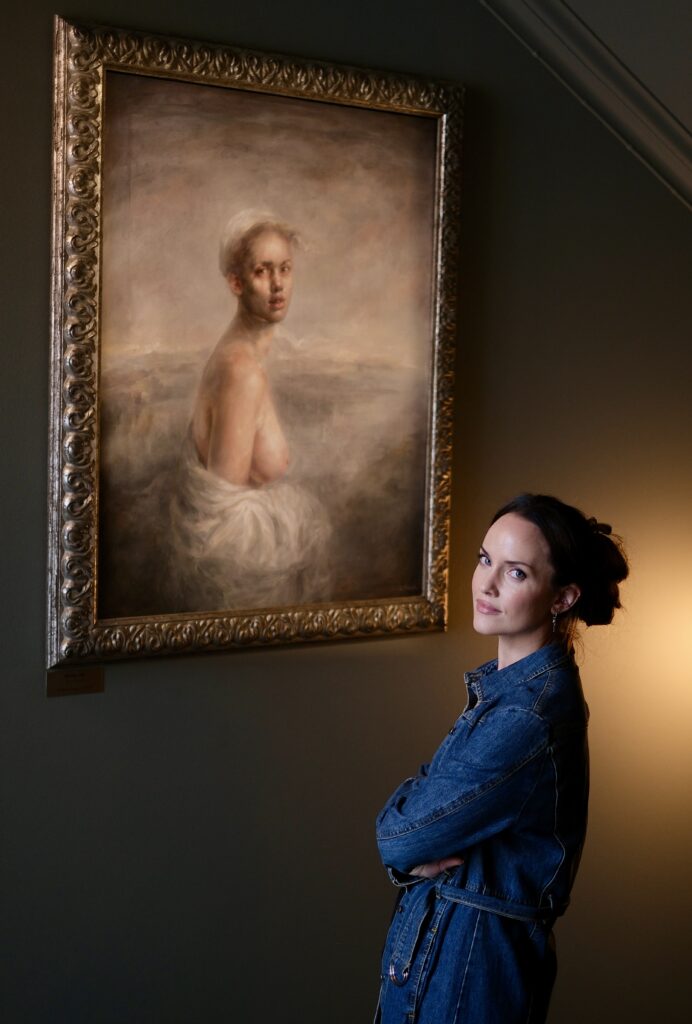
The Artist Leaving Her Mark on Hotel Christiania Teater
At Hotel Christiania Teater, art is a natural part of the experience — in the spaces we move through, the emotions we carry with us, and the moments that are allowed to linger just a little longer.
One of the artists leaving a distinct mark on the hotel is Kaja Norum. Her works greet guests in the stairwell, not as something to be actively sought out, but as something to be discovered along the way, and perhaps paused before in quiet reflection. The artworks invite guests to slow down, reflect, and let their thoughts wander.
With an expression that combines craftsmanship, vulnerability, and human warmth, Norum creates art that allows space for calm, recognition, and contemplation. For us, this collaboration is about highlighting local artists, contributing to Oslo’s vibrant art and cultural scene, and creating a hotel that feels alive, personal, and genuine.
Kaja Norum shares insights into her artistic practice and how her art makes room for the big emotions.
How does it feel for you to have your art displayed at Hotel Christiania Teater, as part of a hotel environment rather than a gallery?
I find it exciting and meaningful that my art encounters people in a living, public space. For many, a hotel can be a place for reflection and new impressions, and I love the idea that art can touch someone who might not actively seek out a gallery. My goal has always been to communicate something universal and deeply human, and a place like Hotel Christiania Teater is a perfect fit. It becomes a bridge between the world of art and everyday life.
As a classical figurative painter, the reality is unfortunately that there are few established galleries in Norway that represent us. That makes alternative arenas such as hotels, restaurants, and public spaces especially important for reaching people with what we create.
What does art mean to you?
For me, art is the discipline of craftsmanship meeting the voice of the soul. It should not only show the world as it is, but also as it can be: filled with beauty and meaning. When I paint a portrait, it is not about making the subject “beautiful” according to superficial standards. It is about capturing inner dignity, vulnerability, or strength, what makes a person whole.
Training this way of seeing, noticing hidden potential and goodness in people and things around me, is a way of practicing a more holistic understanding of reality. This is where craftsmanship meets the soul’s voice: when technique becomes a tool to reveal the deeper connection between outer and inner worlds, between beauty and ethics.
What happens within you when you create?
I disappear into the moment. It becomes a conversation between the hand, the spirit, and what is waiting to be born, a kind of wordless prayer.
Where do you find inspiration?
I am inspired by books, human encounters, and other painters. But above all, love is central to me. I see creating as a declaration of love to life itself.
What do you hope people feel when they encounter your art?
I hope people feel hope and recognition. I believe vulnerable moments resonate most deeply within us, and that sentimentality offers the greatest comfort. I hope my paintings remind us that to be vulnerable is to be alive.
We aim to inspire the mind and awaken the soul. How do you hope your art will affect guests who encounter it at the hotel?
By offering the viewer a moment to breathe, a space where one can meet big emotions without defense mechanisms. Beauty is not an escape from reality, but a way of engaging with it. Art does not need to be explained; it needs to be experienced. And when an image resonates with us, it becomes a home for something we all recognize, but perhaps do not always take the time to discover.
Where do you think the big emotions live?
Big emotions are the soul’s first language, what we feel when we are most open and vulnerable, when we fall in love or stand before something greater than ourselves. They are universal and remind us that we are not alone. A painting can move you so deeply that it feels like coming home to a place you didn’t know you had.
Why do you believe it’s important for a city like Oslo to have a vibrant art and cultural scene?
It is essential for any city to offer art and cultural experiences. A city needs both popular culture and high culture. But we must also be brave enough to acknowledge that there is a difference, and that the classical, formative tradition holds particular value. It is the foundation of our humanism, and its beauty and depth are a public resource we have a responsibility to preserve and carry forward.
This culture makes us more than a collection of individuals; it makes us a civilization with shared historical awareness and an ethical compass. To protect it is to invest in the soul of the city, and in the future’s ability to create something that lasts longer than a trend. In a time when many feel lonely and isolated, culture becomes an invisible thread that binds us together.
What are your top recommendations for art and cultural experiences in Oslo?
The new National Museum is well worth multiple visits, as are the Vigeland Museum, Ekeberg Sculpture Park, and, of course, Hotel Christiania Teater.